Wind turbine - Wind power unit (WPU)
- A wind turbine converts the energy of wind into kinetic energy. If the mechanical energy is used directly by machinery, such as pumping water, cutting lumber or grinding stones, the machine is called a windmill. If the mechanical energy is instead converted to electricity, the machine is called a wind generator, wind turbine, wind power unit (WPU), wind energy converter (WEC), or aero generator.
- Wind turbines can rotate about either a horizontal or vertical axis, the former being more common.
Horizontal axis wind turbines ():
• HAWT have the main rotor shaft and electrical
generator at the top of a tower, and must be pointed into the
wind. Small turbines are pointed by a simple wind vane, while
large turbines generally use a wind sensor coupled with a servo
motor. Most have a gearbox, which turns the slow rotation of the
blades into a quicker rotation that is more suitable to drive an
electrical generator.
• Since a tower produces turbulence behind it, the turbine is
usually pointed upwind of the tower. Turbine blades are made
stiff to prevent the blades from being pushed into the tower by
high winds. Additionally, the blades are placed a considerable
distance in front of the tower and are sometimes tilted forward
into the wind a small amount.
• Downwind machines have been built, despite the problem of
turbulence (mast wake), because they don't need an additional
mechanism for keeping them in line with the wind, and because in
high winds the blades can be allowed to bend which reduces their
swept area and thus their wind resistance. Since cyclic (that is
repetitive) turbulence may lead to fatigue failures most HAWTs
are upwind machines.

Vertical-axis wind turbines (VAWTs):
• Have the main rotor shaft arranged vertically. Key advantages
of this arrangement are that the turbine does not need to be
pointed into the wind to be effective. This is an advantage on
sites where the wind direction is highly variable.
• With a vertical axis, the generator and gearbox can be placed
near the ground, so the tower doesn't need to support it, and it
is more accessible for maintenance. Drawbacks are that some
designs produce pulsating torque.
• It is difficult to mount vertical-axis turbines on
towers[citation needed], meaning they are often installed nearer
to the base on which they rest, such as the ground or a building
rooftop. The wind speed is slower at a lower altitude, so less
wind energy is available for a given size turbine. Air flow near
the ground and other objects can create turbulent flow, which
can introduce issues of vibration, including noise and bearing
wear which may increase the maintenance or shorten the service
life. However, when a turbine is mounted on a rooftop, the
building generally redirects wind over the roof and this can
double the wind speed at the turbine. If the height of the
rooftop mounted turbine tower is approximately 50% of the
building height, this is near the optimum for maximum wind
energy and minimum wind turbulence.
Comparison table of two types of wind turbine:
| Advantages | Disadvantages | |
| HAWT | Variable blade pitch, which gives the
turbine blades the optimum angle of attack. Allowing the
angle of attack to be remotely adjusted gives greater
control, so the turbine collects the maximum amount of
wind energy for the time of day and season. |
The tall towers and blades up to 45 meters long are difficult
to transport. Transportation can now amount to 20% of equipment costs. |
| VAWTs | A massive tower structure is less frequently used, as
VAWTs are more frequently mounted with the lower bearing
mounted near the ground. |
A VAWT that uses guy-wires to hold it in place puts stress on the bottom bearing
as all the weight of the rotor is on the bearing. Guy wires attached to the top
bearing increase downward thrust in wind gusts. Solving this problem requires a
superstructure to hold a top bearing in place to eliminate the downward thrusts
of gust events in guy wired models. |
GRINOR provide the best products which have been awarded such international certificates:
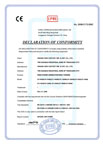 CE |
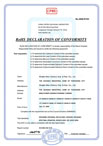 RoHS |
|
  ISO9001 |